Coffee Shop Networking: When the Office Works Like a Café
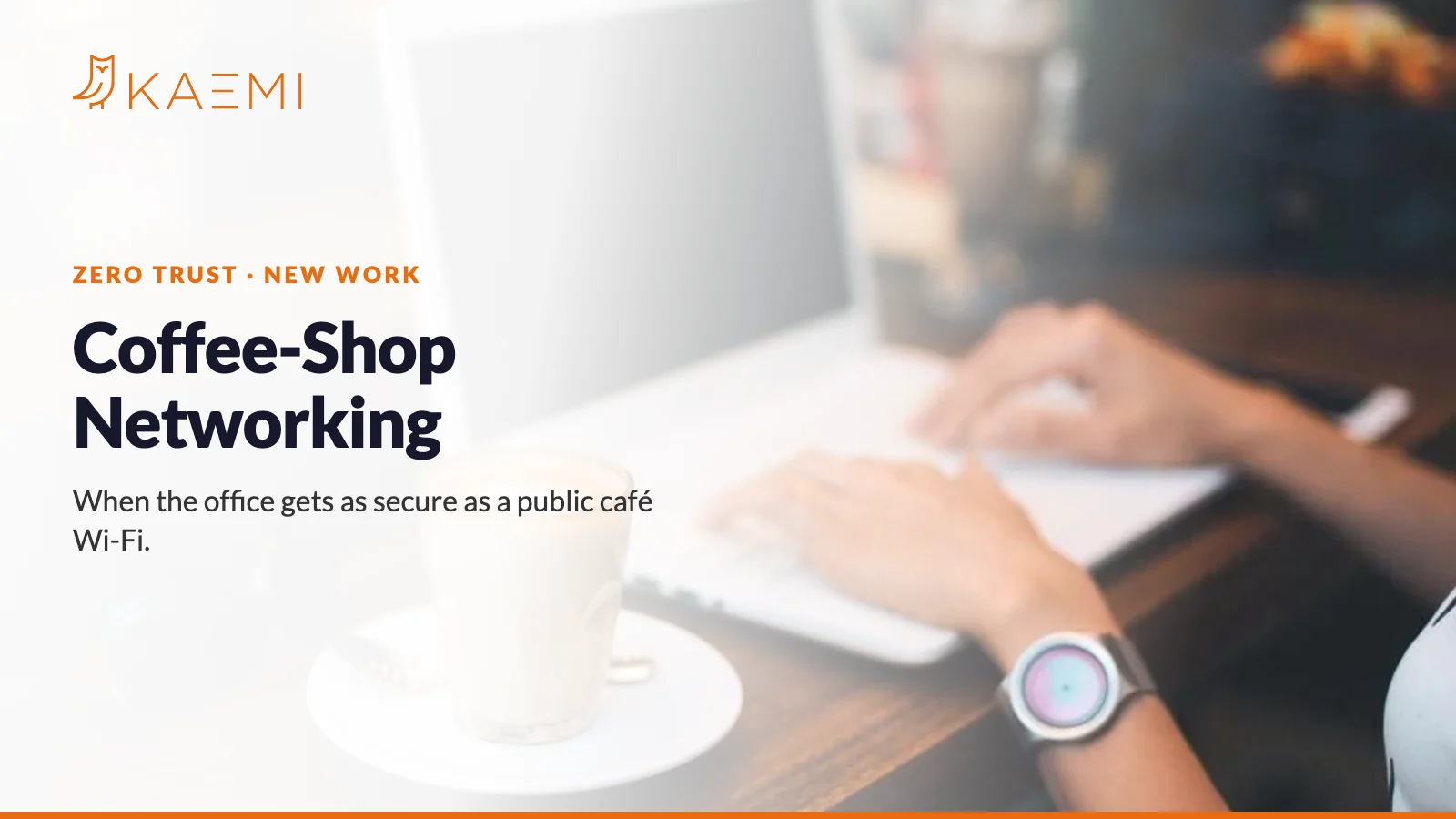
In a café, nobody asks whether the Wi-Fi can be trusted. The answer is obvious: no. Every access to company applications there is, as a matter of course, encrypted and authenticated. Coffee shop networking (a concept described by Cloudflare in its Learning Center, among others) transfers exactly this attitude to the office: the corporate network is treated as if it were public café Wi-Fi. Trust is no longer granted by location, only by identity.
The end of castle and moat
Traditional networks follow the castle-and-moat principle: whoever is inside is considered trustworthy, and defense concentrates on the perimeter. This model breaks down twice over: applications have long since moved to the cloud, and employees work from everywhere. The result is VPN constructions that funnel all traffic back into the data center before it is allowed onto the internet: slow for users, expensive to maintain, and risky, because a single compromised access reaches deep into the network.
The café networking principle
Coffee shop networking flips the logic: there is no privileged interior anymore. Whether at a desk in the office, at home, or actually in a café: every access to every application goes through the same identity-based controls. Login, device posture, and context are checked on every access (Zero Trust Network Access), and the connection goes directly and encrypted to the application instead of into the corporate network. The office network itself shrinks down to the essentials: fast, simple internet access.
What companies get out of it
The gains come on both sides. Security: the attack surface shrinks because there is no longer a flat internal network for attackers to move through laterally. Policies apply identically everywhere. User experience: no VPN detour, no two worlds of "inside and outside," the same performance at every workplace. Day-to-day IT: site networks become drastically simpler, new offices are connected faster, and guest or partner access stops being a headache.
How to get there
The transition works best step by step: inventory applications, connect the identity provider, put the first applications behind Zero Trust access, and retire the VPN group by group. The order matters: first the secure access path, then the dismantling of the old trust zones.
KAEMI supports this transition from analysis through the pilot group to the managed service. What identity-based access looks like in concrete terms is shown on our page on SASE/SSE and Zero Trust Network Access.
Questions about the café principle in your own company? A message to sales@kaemi.io is all it takes.